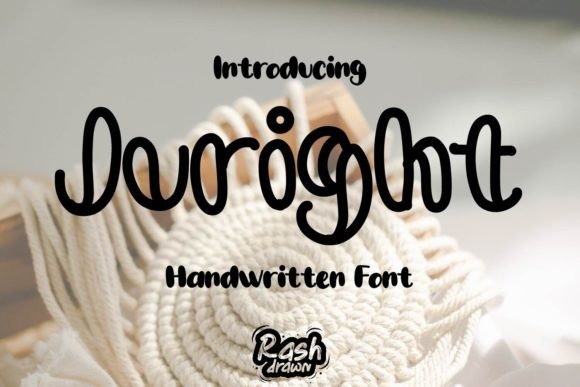
Juright: A Friendly Handwritten Font
There I was, staring at a blank brand board, trying to figure out how to make a new café concept feel warm and inviting. The client wanted something that felt personal, like the owner had hand-picked every detail. That’s when I reached for Juright.
Juright is a fun and friendly handwritten font that brings a sense of approachability to any design. Its fluid strokes and slight irregularities give it a human touch, making it feel less like a digital typeface and more like a signature written with care. It has a casual, playful vibe that works well for brands aiming to feel authentic and relatable.
Visual Characteristics and Personality
Juright’s visual style is unmistakably handmade. The letters flow with a natural rhythm, and each character carries a subtle variation that avoids the rigid uniformity of most digital fonts. This makes it perfect for projects where a little imperfection adds charm rather than detracts from clarity.
The font has a soft, rounded personality that leans toward the whimsical. It doesn’t have the sharpness of a sans serif or the formality of a serif, but it sits comfortably in between. It’s not overly ornate, which means it can work in a variety of settings without feeling too busy.
Real-World Branding Applications
I tested Juright on a logo concept for a small café, and it immediately stood out. The font’s curves and gentle swashes gave the logo a friendly, welcoming feel. When paired with a simple sans serif for the tagline, it created a nice balance between creativity and readability.
On packaging mockups, Juright added a unique touch that made the product feel more personal. It worked especially well on labels and signage, where its organic shape helped draw attention without overwhelming the design. For a bakery’s packaging, it felt right at home—like the kind of font you’d expect to see on a hand-stamped label.
In web design, Juright shone as a headline font. On a homepage hero section, it brought a sense of warmth and energy that matched the brand’s tone. It didn’t fare as well in smaller text sizes, though. In body copy, it became hard to read, which is a common limitation for handwritten fonts.
Strengths and Limitations
Juright excels as a display or accent font. It’s ideal for headlines, logos, and short phrases where its personality can shine. It works best when used sparingly, allowing it to stand out without competing with other design elements.
However, it’s not the best choice for long paragraphs or formal corporate branding. Its informal nature might not align with the professionalism expected in certain industries. Additionally, some characters may look inconsistent depending on the context, so careful kerning and spacing are important.
Font Pairing and Design Integration
When pairing Juright with other fonts, a clean, neutral typeface often helps it stand out. A serif font like Playfair Display or a sans serif like Lato can provide contrast while maintaining visual harmony. It also pairs well with other script fonts, but be cautious not to overdo it—too many handwritten elements can feel cluttered.
In editorial design, Juright can add a personal touch to headings or pull quotes. It’s also great for social media graphics, where its friendly appearance can help engage audiences. On business cards, it adds a memorable detail that sets a brand apart from the competition.
Practical Considerations
Before using Juright in final client work, it’s wise to test it across different mediums. Print and screen rendering can vary, so seeing how it looks on paper or a website is essential. Also, check the font’s multilingual support if the project involves non-English text.
Juright is available in multiple weights and includes alternates and ligatures, which can enhance its versatility. Webfont availability is important for digital projects, so make sure to confirm that the license allows for web use if needed.
As with any commercial font, always review the licensing terms before using Juright in client work, packaging, or merchandise. Proper licensing ensures that you’re compliant and protects both you and your clients from potential issues.